“My daughter is severely autistic, practically non verbal and has very restricted social communication skills but despite all of that Nicole and swimming teachers found unique way to teach and show the joys of swimming.
From a child who was terrified to get inside a swimming pool she now enjoys her lessons, she can swim independently on her front, back (which she hated for long time), she even can dive underneath the water.
Core Aquatics is one of the best things that happened in my daughters life, it’s absolutely brilliant.”
Swimming is a valuable life skill for any child. For many autistic children, it can also bring wider benefits that support confidence, wellbeing, and independence. The pool can be a calm, structured environment where progress is built through small steps, clear routines, and consistent support.
With the right teaching approach, swimming can become something your child enjoys and feels proud of, not something that feels overwhelming.
Water safety and confidence around water
Safety is often the biggest reason families choose swimming lessons. Water is part of everyday life, from pools and holidays to days out near lakes and beaches. Helping an autistic child become comfortable in and around water can reduce fear and panic, especially in unfamiliar situations.
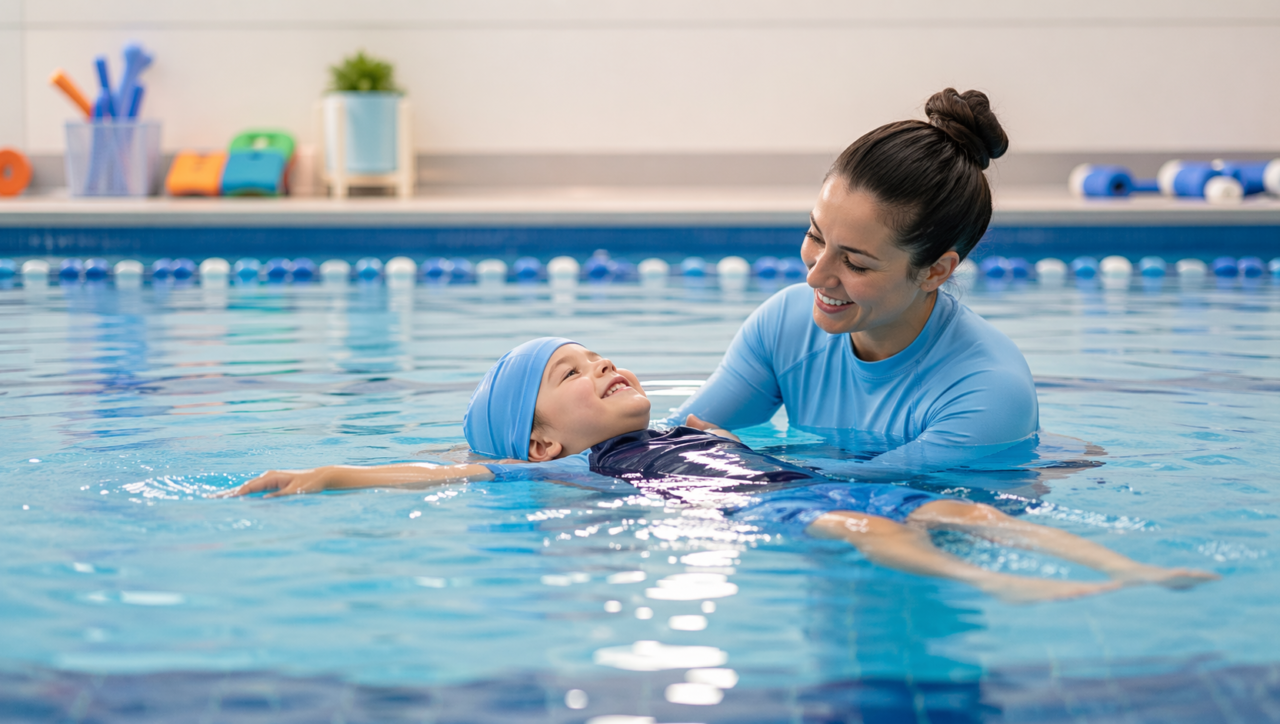
Lessons often begin with simple foundations such as entering the pool calmly, holding the side, floating with support, and returning to a safe point. Those skills build confidence, and confidence supports safer decision making.
A sensory environment that can feel calming
Water can be naturally regulating for many autistic children. The gentle pressure of the water, combined with steady movement and repetition, can feel soothing and grounding. That sense of calm can help children feel more settled during the lesson and more confident trying new skills.
Every child is different, and some children may find the water feel unfamiliar at first. A patient teacher and a gradual approach can make all the difference, especially when the focus stays on comfort first.
Stronger motor skills and body awareness
Swimming supports coordination, balance, strength, and overall body awareness. The water provides resistance and support at the same time, which can make it easier to practise movements in a controlled way.
Over time, many children develop improved posture, better control of movement, and stronger stamina. Progress can also support confidence outside the pool, because children begin to trust what their body can do.
Predictable routines that build trust
Many autistic children thrive when routines are clear and consistent. A well structured lesson tends to follow a familiar flow, such as a warm up, skill practice, a short challenge, and a calm finish. That predictability can reduce anxiety and make the session feel safe.
When children know what to expect, they are more likely to engage, practise, and build trust with their teacher. That trust often leads to better progress, because your child feels supported rather than pressured.
Communication and social confidence in a low pressure setting
Swimming lessons can support communication in a simple, practical way. Teachers often use clear instructions, visual cues, and consistent language. Children also practise listening, following short steps, and responding to prompts, all within an activity that feels engaging.
In small group lessons, some children benefit from watching others, taking turns, and joining in when they feel ready. The goal is never forced interaction. It is about creating an environment where confidence can grow naturally.
Independence and pride through small milestones
Progress in swimming is built on small achievements. For autistic children, those milestones can be powerful. A first float, a first swim to the wall, or a first length can be a real confidence boost.
Swimming also supports independence. Children learn routines such as getting ready, following pool rules, using equipment, and managing transitions. These skills can support confidence in other areas of life too.
A healthy outlet that supports wellbeing
Swimming is a full body activity that can support better sleep, improved mood, and a healthier weekly routine. Many families find that regular swimming gives children a positive outlet for energy, while still feeling calm and structured.
When lessons are enjoyable, swimming becomes something children look forward to, and that is often where the best progress happens.
Helping your child get the most from lessons
A few simple steps can help make swimming feel more familiar from day one. Share as much detail as you can when you enquire, including what your child enjoys, what can cause anxiety, and what helps them feel calm. Talking through what will happen, using simple language and routines, can also make the first visit feel less unknown.
Most importantly, celebrate small wins. In swimming, small steps often lead to the biggest breakthroughs.
Autism Swim Approved lessons at Core Aquatics
At Core Aquatics, we welcome swimmers of all abilities and we understand that every child needs a different approach. We are an Autism Swim Approved swim school, and our teachers use calm, supportive methods that focus on confidence, routine, and progress at the right pace.
If you would like to discuss the best lesson option for your child, get in touch and we will guide you through the next steps.